

AAAI-27 Tutorial TH01

Misinformation in the Age of LLM Agents: Generation, Propagation, and Intervention大语言模型智能体时代的虚假信息:生成、传播与干预

Date日期

Tuesday, 16 February 20272027 年 2 月 16 日(周二)

Time时间

TBD待定

Location地点

Montréal, Canada加拿大蒙特利尔

LLM agents change what misinformation is, and give us new ways to study it大语言模型智能体改变了虚假信息的面貌,也为研究它提供了新方法

A single model can fabricate a plausible claim. An agent can refine that claim against feedback, tailor it to an audience, push it through a social network, and gradually change what people believe. The same agents also give researchers a laboratory in which the spread of falsehoods, the drift of beliefs, and the effect of corrections can be simulated, measured, and stress-tested before they play out on real platforms.单个模型就能编造出一条看似可信的说法;智能体则更进一步:它能根据反馈反复打磨这条说法,针对不同受众调整措辞,再借助社交网络扩散出去,一点点改变人们的看法。另一方面,这些智能体也为研究者提供了一个实验场:在虚假信息真正在平台上蔓延之前,就可以先对它的传播、观点的变化以及纠正措施的效果进行模拟、测量和压力测试。

This tutorial covers recent work in this area through three questions:本次 Tutorial 围绕三个问题,介绍这一方向的最新研究:

  1. How do agents generate misinformation, from unintended hallucination to goal-directed fabrication and the co-evolution of generators and detectors?智能体如何生成虚假信息?从无意中产生的幻觉,到有目的的编造,再到生成器与检测器在对抗中的共同演化。
  2. How does misinformation propagate as LLM personas spread, distort, and polarize around content, and when can such simulations be trusted to reflect real populations?虚假信息如何传播?由 LLM 扮演的用户会转发、歪曲内容,观点也会随之两极分化;这类模拟在什么情况下才能可信地反映真实人群?
  3. How can agents intervene, through evidence retrieval, multi-agent fact-checking and debate, and correction strategies, and how reliable are the verifiers themselves?智能体如何干预虚假信息?手段包括证据检索、多智能体事实核查与辩论、纠正策略等;而负责核查的智能体本身又有多可靠?

Who should attend适合人群

Researchers, students, and practitioners in NLP, information retrieval, social computing, trustworthy AI, and multi-agent systems.自然语言处理、信息检索、社会计算、可信 AI 和多智能体系统等方向的研究者、学生和从业者。

Prerequisites预备知识

Basic familiarity with machine learning, NLP, and large language models. No prior experience with agents or social simulation is assumed.具备机器学习、自然语言处理和大语言模型的基础知识即可,不要求有智能体或社会模拟方面的经验。

  1. Part I第一部分 ~70 min约 70 分钟

    Misinformation Generation虚假信息的生成

    • LLM-generated misinformation: mechanisms and methodsLLM 生成虚假信息的机制与方法
    • Goal-directed misinformation generation with agents基于智能体的目标导向型虚假信息生成
    • Adversarial co-evolution of generators and detectors生成器与检测器的对抗式共同演化

    From hallucination and source distortion to agents that draft, evaluate, and revise narratives, and detectors that must keep up.从幻觉与信源歪曲,到能够起草、评估并修改叙事的智能体,以及需要随之升级的检测器。

  2. Part II第二部分 ~70 min约 70 分钟

    Agent-Based Propagation Simulation基于智能体的传播模拟

    • Modeling users, social networks, and interactions用户、社交网络与交互建模
    • Content evolution, belief dynamics, and polarization内容演变、观点动态与两极分化
    • Evaluation and validation of social simulations社会模拟的评估与验证

    How LLM personas pass content along, how it mutates, how beliefs shift, and how to check a simulation against real data.LLM 扮演的用户如何传递内容、内容如何变形、观点如何转变,以及如何用真实数据检验模拟结果。

  3. Part III第三部分 ~70 min约 70 分钟

    Agent-Based Verification and Intervention基于智能体的核查与干预

    • Evidence retrieval and multi-agent fact-checking证据检索与多智能体事实核查
    • Misinformation correction and intervention strategies虚假信息的纠正与干预策略
    • Reliability and dynamic evaluation of verification agents核查智能体的可靠性与动态评估

    Agents that retrieve evidence, debate, and write corrections, and the failure modes that make verifiers unreliable.能够检索证据、相互辩论并撰写更正内容的智能体,以及让核查者变得不可靠的各种失效模式。

Program日程安排

Room and exact times will be posted once AAAI-27 releases the tutorial program.具体教室和时间将在 AAAI-27 公布 Tutorial 日程后更新。

Time时间Session环节Length时长
TBD待定 Part I第一部分 Misinformation Generation虚假信息的生成 ~70 min约 70 分钟
TBD待定 Part II第二部分 Agent-Based Propagation Simulation基于智能体的传播模拟 ~70 min约 70 分钟
TBD待定 Coffee break茶歇 30 min30 分钟
TBD待定 Part III第三部分 Agent-Based Verification and Intervention基于智能体的核查与干预 ~70 min约 70 分钟

Organizers组织者

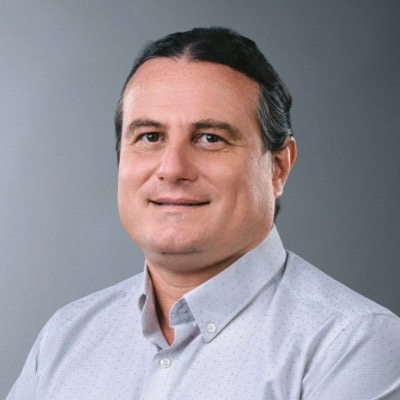
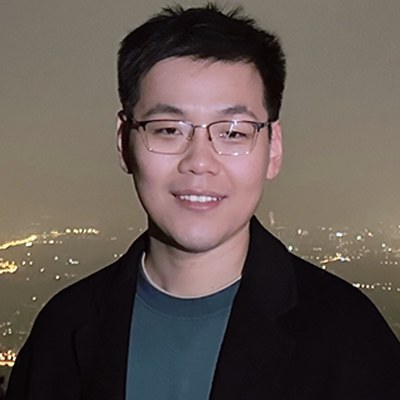
Yuhan Liu

Yuhan Liu刘雨涵 Yuhan Liu

Postdoctoral Researcher, MBZUAIMBZUAI 博士后研究员

Ph.D., Renmin University of China (2025). Works on agentic AI for a trustworthy information ecosystem, spanning misinformation, LLM agents, and multimodal content, with papers at ACL, EMNLP, IJCAI, SIGIR, NeurIPS, and ICLR. DAAD AInet Fellow and ACL, EMNLP Area Chair.2025 年博士毕业于中国人民大学。研究面向可信信息生态的智能体 AI,涵盖虚假信息、LLM 智能体和多模态内容,论文发表于 ACL、EMNLP、IJCAI、SIGIR、NeurIPS 和 ICLR 等会议。DAAD AInet Fellow,担任 ACL、EMNLP 领域主席(Area Chair)。

Xiuying Chen

Xiuying Chen陈秀颖 Xiuying Chen

Assistant Professor, MBZUAIMBZUAI 助理教授

Ph.D., KAUST (2024). Leads the HALO Lab on trustworthy language models, publishing at ACL, ICML, NeurIPS, and ICLR. Recipient of an Amazon Research Award and MBZUAI's Rising Star Award; Area Chair for AAAI, ACL, EMNLP, NeurIPS, and KDD.2024 年博士毕业于 KAUST。带领 HALO 实验室研究可信语言模型,论文发表于 ACL、ICML、NeurIPS 和 ICLR 等会议。曾获 Amazon Research Award 和 MBZUAI Rising Star Award,担任 AAAI、ACL、EMNLP、NeurIPS 和 KDD 的领域主席。

Preslav Nakov

Preslav Nakov

Professor and NLP Program Director, MBZUAIMBZUAI 教授、自然语言处理项目主任

Ph.D., UC Berkeley. Works on disinformation, propaganda, fact-checking, and machine-generated content detection. First recipient of Bulgaria's John Atanasoff Presidential Award, Program Co-Chair of ACL 2022, and Action Editor of TACL.博士毕业于加州大学伯克利分校。研究虚假信息、宣传操纵、事实核查和机器生成内容检测。是保加利亚 John Atanasoff 总统奖的首位获得者,曾任 ACL 2022 程序委员会联合主席,并担任 TACL 执行编辑(Action Editor)。

Xiangliang Zhang

Xiangliang Zhang张响亮 Xiangliang Zhang

Leonard C. Bettex Collegiate Professor, University of Notre Dame圣母大学讲席教授(Leonard C. Bettex Collegiate Professor)

Research centers on trustworthy AI, from foundation models to agentic systems. Editor-in-Chief of IEEE Transactions on Knowledge and Data Engineering (TKDE) and ACM SIGKDD Explorations, and Research Track Program Co-Chair of KDD 2026–2027.主要从事可信 AI 研究,范围从基础模型延伸到智能体系统。担任 IEEE Transactions on Knowledge and Data Engineering(TKDE)和 ACM SIGKDD Explorations 主编,以及 KDD 2026–2027 Research Track 程序委员会联合主席。

Selected references精选文献

Grouped by tutorial part. This list is still a work in progress; the final version will be posted here.按 Tutorial 的三个部分分组。清单仍在完善中,最终版本会在这里更新。

Part I第一部分 Generation生成

  1. Factuality of Large Language Models: A Survey Yuxia Wang, Minghan Wang, Muhammad Arslan Manzoor, Fei Liu, Georgi Georgiev, Rocktim Jyoti Das, Preslav Nakov. EMNLP 2024
  2. Towards Improving Faithfulness in Abstractive Summarization Xiuying Chen, Mingzhe Li, Xin Gao, Xiangliang Zhang. NeurIPS 2022
  3. On the Risk of Misinformation Pollution with Large Language Models Yikang Pan, Liangming Pan, Wenhu Chen, Preslav Nakov, Min-Yen Kan, William Yang Wang. Findings of EMNLP 2023
  4. How does Truth Evolve into Fake News? An Empirical Study of Fake News Evolution Mingfei Guo, Xiuying Chen, Juntao Li, Dongyan Zhao, Rui Yan. WWW Companion 2021
  5. The Stepwise Deception: Simulating the Evolution from True News to Fake News with LLM Agents Yuhan Liu, Zirui Song, Juntian Zhang, Xiaoqing Zhang, Xiuying Chen, Rui Yan. EMNLP 2025
  6. Detecting AI-Generated Video: A Vision–Language Dual-View Survey Dylan Xinming Hou, Juntian Zhang, Xu Gu, Yichen Wu, Nils Lukas, Gus Xia, Xiuying Chen, Yuhan Liu. Findings of ACL 2026
  7. A Symbolic Adversarial Learning Framework for Evolving Fake News Generation and Detection Chong Tian, Qirong Ho, Xiuying Chen. EMNLP 2025
  8. When Personalization Tricks Detectors: The Feature-Inversion Trap in Machine-Generated Text Detection Lang Gao, Xuhui Li, Chenxi Wang, Mingzhe Li, Wei Liu, Zirui Song, Jinghui Zhang, Rui Yan, Preslav Nakov, Xiuying Chen. ACL 2026
  9. M4GT-Bench: Evaluation Benchmark for Black-Box Machine-Generated Text Detection Yuxia Wang, Jonibek Mansurov, Petar Ivanov, Jinyan Su, Artem Shelmanov, Akim Tsvigun, Osama Mohammed Afzal, Tarek Mahmoud, Giovanni Puccetti, Thomas Arnold, Alham Fikri Aji, Nizar Habash, Iryna Gurevych, Preslav Nakov. ACL 2024
  10. Invisible Entropy: Towards Safe and Efficient Low-Entropy LLM Watermarking Tianle Gu, Zongqi Wang, Kexin Huang, Yuanqi Yao, Xiangliang Zhang, Yujiu Yang, Xiuying Chen. EMNLP 2025

Part II第二部分 Propagation传播

  1. Generative Agents: Interactive Simulacra of Human Behavior Joon Sung Park, Joseph C. O'Brien, Carrie J. Cai, Meredith Ringel Morris, Percy Liang, Michael S. Bernstein. UIST 2023
  2. Large Language Model Based Multi-Agents: A Survey of Progress and Challenges Taicheng Guo, Xiuying Chen, Yaqi Wang, Ruidi Chang, Shichao Pei, Nitesh V. Chawla, Olaf Wiest, Xiangliang Zhang. IJCAI 2024
  3. From Skepticism to Acceptance: Simulating the Attitude Dynamics Toward Fake News Yuhan Liu, Xiuying Chen, Xiaoqing Zhang, Xing Gao, Ji Zhang, Rui Yan. IJCAI 2024
  4. Decoding Echo Chambers: LLM-Powered Simulations Revealing Polarization in Social Networks Chenxi Wang, Zongfang Liu, Dequan Yang, Xiuying Chen. COLING 2025
  5. RiskLab: A Controlled Toolkit for Probing Emergent Risks in LLM-Based Multi-Agent Systems Yu Jiang, Wenjie Wang, Yue Huang, Yanbo Wang, Zhenhong Zhou, Xiuying Chen, Yang Liu, Pin-Yu Chen, Wei Wang, Xiangliang Zhang. ACL 2026 System Demonstrations
  6. Position: Time to Close The Validation Gap in LLM Social Simulations Maximilian Puelma Touzel, Sneheel Sarangi, Aurélien Bück-Kaeffer, Zachary Yang, Jean-François Godbout, Reihaneh Rabbany. ICML 2026

Part III第三部分 Verification and intervention核查与干预

  1. FEVER: A Large-Scale Dataset for Fact Extraction and VERification James Thorne, Andreas Vlachos, Christos Christodoulopoulos, Arpit Mittal. NAACL-HLT 2018
  2. OpenFactCheck: A Unified Framework for Factuality Evaluation of LLMs Hasan Iqbal, Yuxia Wang, Minghan Wang, Georgi Georgiev, Jiahui Geng, Iryna Gurevych, Preslav Nakov. EMNLP 2024 Demos
  3. Predicting Factuality of Reporting and Bias of News Media Sources Ramy Baly, Georgi Karadzhov, Dimitar Alexandrov, James Glass, Preslav Nakov. EMNLP 2018
  4. The Truth Becomes Clearer Through Debate! Multi-Agent Systems with Large Language Models Unmask Fake News Yuhan Liu, Yuxuan Liu, Xiaoqing Zhang, Xiuying Chen, Rui Yan. SIGIR 2025
  5. Beyond the Crowd: LLM-Augmented Community Notes for Governing Health Misinformation Jiaying Wu, Zihang Fu, Haonan Wang, Fanxiao Li, Jiafeng Guo, Preslav Nakov, Min-Yen Kan. ACL 2026
  6. Accuracy Prompts Are a Replicable and Generalizable Approach for Reducing the Spread of Misinformation Gordon Pennycook, David G. Rand. Nature Communications 13:2333, 2022
  7. Preference Leakage: A Contamination Problem in LLM-as-a-Judge Dawei Li, Renliang Sun, Yue Huang, Ming Zhong, Bohan Jiang, Jiawei Han, Xiangliang Zhang, Wei Wang, Huan Liu. ICLR 2026
  8. Building a Foundational Guardrail for General Agentic Systems via Synthetic Data Yue Huang, Hang Hua, Yujun Zhou, Pengcheng Jing, Manish Nagireddy, Inkit Padhi, Greta Dolcetti, Zhangchen Xu, Subhajit Chaudhury, Ambrish Rawat, Liubov Nedoshivina, Pin-Yu Chen, Prasanna Sattigeri, Xiangliang Zhang. ICLR 2026
  9. TRUSTEVAL: A Dynamic Evaluation Toolkit on Trustworthiness of Generative Foundation Models Yanbo Wang, Jiayi Ye, Siyuan Wu, Chujie Gao, Yue Huang, Xiuying Chen, Yue Zhao, Xiangliang Zhang. NAACL 2025 System Demonstrations
  10. TrustGen: A Platform of Dynamic Benchmarking on the Trustworthiness of Generative Foundation Models Yue Huang, Chujie Gao, Siyuan Wu, Haoran Wang, Xiangqi Wang, Jiayi Ye, Yujun Zhou, Yanbo Wang, Jiawen Shi, Qihui Zhang, Han Bao, Zhaoyi Liu, Yuan Li, Tianrui Guan, Peiran Wang, Haomin Zhuang, Dongping Chen, Kehan Guo, Andy Zou, Bryan Hooi, Caiming Xiong, Elias Stengel-Eskin, Hongyang Zhang, Hongzhi Yin, Huan Zhang, Huaxiu Yao, Jieyu Zhang, Jaehong Yoon, Kai Shu, Ranjay Krishna, Swabha Swayamdipta, Weijia Shi, Xiang Li, Yuexing Hao, Zhihao Jia, Zhize Li, Xiuying Chen, Zhengzhong Tu, Xiyang Hu, Tianyi Zhou, Jieyu Zhao, Lichao Sun, Furong Huang, Or Cohen-Sasson, Prasanna Sattigeri, Anka Reuel, Max Lamparth, Yue Zhao, Nouha Dziri, Yu Su, Huan Sun, Heng Ji, Chaowei Xiao, Mohit Bansal, Nitesh V. Chawla, Jian Pei, Jianfeng Gao, Michael Backes, Philip S. Yu, Neil Zhenqiang Gong, Pin-Yu Chen, Bo Li, Dawn Song, Xiangliang Zhang. ICLR 2026
  11. Benchmarking Uncertainty Quantification Methods for LLMs with LM-Polygraph Roman Vashurin, Ekaterina Fadeeva, Artem Vazhentsev, Lyudmila Rvanova, Daniil Vasilev, Akim Tsvigun, Sergey Petrakov, Rui Xing, Abdelrahman Sadallah, Kirill Grishchenkov, Alexander Panchenko, Timothy Baldwin, Preslav Nakov, Maxim Panov, Artem Shelmanov. TACL 13, 2025

Slides and resources幻灯片与相关资源

Slides幻灯片

Available after the tutorial.Tutorial 结束后发布。

Coming soon即将发布

Recording录像

Posted here if the session is recorded.如有录像,会发布在这里。

Coming soon即将发布

Reading list阅读清单

27 papers grouped by tutorial part.27 篇论文,按 Tutorial 的三个部分分组。

View list查看清单

Cite this tutorial欢迎引用

@misc{liu2027misinfoagents,
  title  = {Misinformation in the Age of LLM Agents:
            Generation, Propagation, and Intervention},
  author = {Liu, Yuhan and Chen, Xiuying and Nakov, Preslav
            and Zhang, Xiangliang},
  note   = {Tutorial at the AAAI Conference on Artificial
            Intelligence (AAAI-27)},
  year   = {2027}
}

Check Details & Join Us了解详情,欢迎参加

Don't miss this in-depth tutorial on misinformation in the age of LLM agents.不要错过这场关于 LLM 智能体与虚假信息的深度教程。